In today’s fast-paced business world, the term “digital marketing” is everywhere. But what exactly does it mean, and why is it so crucial for your success? Whether you’re a small business owner or an aspiring marketer, understanding the fundamentals of digital marketing is the first step toward building a powerful online presence.
What Is Digital Marketing?
Digital marketing, also known as online marketing, refers to all marketing efforts that occur on the internet. Businesses leverage digital channels such as search engines, social media, email, and other websites to connect with current and prospective customers. Unlike traditional marketing, which relies on print ads, billboards, and television, digital marketing allows for real-time interaction and precise targeting.
How Digital Marketing Works
At its core, digital marketing works by meeting your audience where they spend most of their time: online. It involves a combination of strategies designed to attract, engage, and convert visitors into loyal customers. By using data and analytics, businesses can track user behavior and refine their campaigns for maximum impact.
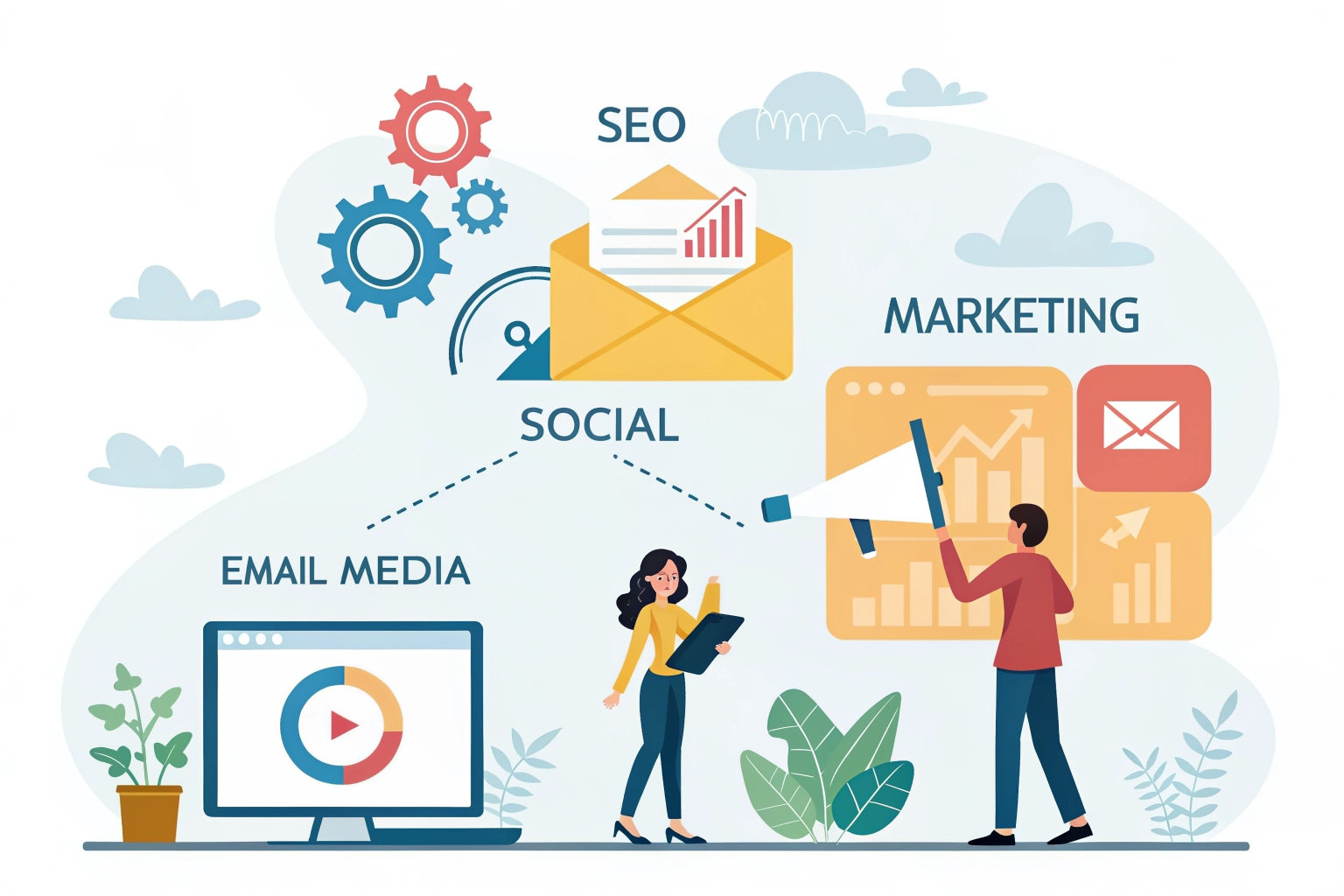
Main Types of Digital Marketing
1. Search Engine Optimization (SEO)
SEO is the process of optimizing your website to “rank” higher in search engine results pages, thereby increasing the amount of organic (or free) traffic your website receives. Our SEO services focus on technical optimization, content quality, and backlink building.
2. Social Media Marketing (SMM)
This involves promoting your brand and your content on social media channels to increase brand awareness, drive traffic, and generate leads for your business. Effective Social Media Marketing requires consistent engagement and high-quality visuals.
3. Search Engine Marketing (SEM) / Paid Advertising
SEM refers to paid efforts to increase visibility on search engines. This often involves Pay-Per-Click (PPC) advertising, such as Google Ads or Meta Ads, which can provide immediate results.
4. Content Marketing
Content marketing focuses on creating and distributing valuable, relevant, and consistent content to attract and retain a clearly defined audience. This includes blog posts, whitepapers, and infographics.
5. Email Marketing
Companies use email marketing as a way of communicating with their audiences. Email is often used to promote content, discounts, and events, as well as to direct people toward the business’s website.
6. Video Marketing
Video is one of the most engaging forms of content. Professional video editing can transform raw footage into compelling stories that resonate with your audience on platforms like YouTube and Instagram.
7. Local SEO
Local SEO helps businesses promote their products and services to local customers at the exact time they’re looking for them online. This is vital for brick-and-mortar stores.
The Benefits of Digital Marketing
Why do businesses choose digital marketing over traditional methods? The benefits are numerous:
- Global Reach: A website allows you to find new markets and trade globally for only a small investment.
- Lower Cost: A properly planned and well-targeted digital marketing campaign can reach the right customers at a much lower cost than traditional marketing methods.
- Trackable, Measurable Results: Measuring your online marketing with web analytics and other online metric tools makes it easier to establish how effective your campaign has been.
- Personalization: If your customer database is linked to your website, then whenever someone visits the site, you can greet them with targeted offers.

How Digital Marketing Helps Small Businesses
For small businesses, digital marketing is a game-changer. It levels the playing field, allowing smaller brands to compete with large corporations. By focusing on niche markets and using highly targeted ads, small businesses can achieve a high return on investment (ROI) without needing a massive budget.
Why a Digital Marketing Strategy Is Important
Without a strategy, you’re just shooting in the dark. A clear digital marketing strategy helps you define your goals, identify your target audience, and choose the right channels to reach them. It ensures that all your efforts are aligned and working toward a common objective. For more insights on industry standards, you can explore resources from HubSpot’s marketing statistics.
Conclusion
Digital marketing is no longer optional; it’s a necessity for any business looking to thrive in the modern era. By understanding what digital marketing is and leveraging its various types—from SEO to social media—you can build a sustainable growth engine for your brand. Ready to take the next step? Explore our full range of digital marketing services today.